Why Your Knowledge Stays in the Room Where You Studied?
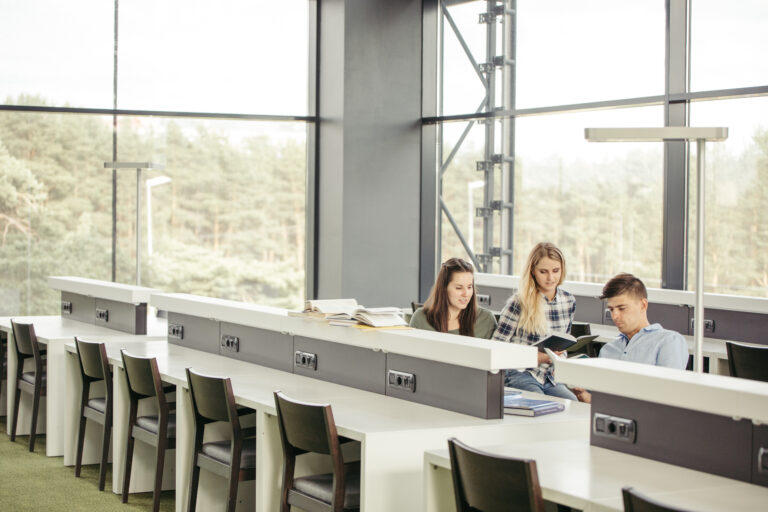
The evening before an exam, the material can feel so firmly mastered that it’s hard to imagine any of it slipping away. And yet the next morning you sit down in the exam hall and look at the first question. The same facts that flowed effortlessly just yesterday are suddenly out of reach. It’s as if the knowledge stayed home — in that same room, at that same desk, where everything was in its place the night before. It’s easy to blame nerves or fatigue, and sometimes that really is what’s going on. But behind this common experience lies a mechanism that has little to do with stress. Instead, it reveals something surprising about where we actually store the things we learn.
Let’s start with something everyone knows from their own life. Years later, all it takes is hearing a song from one particular summer to be transported back to that place in an instant. You recall the smell, the light, the faces of the people who were beside you then. You don’t summon that memory deliberately; the sound pulls it out for you. Here, memory behaves like something attached to its surroundings rather than sealed away inside your head. And exactly the same mechanism applies to the material you study for an exam.
Researchers tested this in an experiment in which two groups learned the same list of words1. One group went through it twice in the same room; the other studied it once in one room and once in a completely different one. Afterward, everyone recalled the words in a neutral, third location. The group that had studied in two different rooms remembered an average of 24.4 words. The group tied to a single room recalled only 15.9. The difference reaches 50%, and the only thing separating the two groups was the number of places where the knowledge had been encoded.
When the brain learns something, it doesn’t record the content in a vacuum. Along the way, it latches onto whatever happens to be around it1. The view through the window, the layout of the desk, the time of day — these become extra anchors you can later pull on to retrieve the material. When you always study in one place, all those anchors are identical. And in the exam hall, not one of them is present. Hence that feeling of emptiness: the knowledge is still there somewhere, but the hooks that used to let you reach it are gone.
A logical conclusion then suggests itself. If the surroundings matter so much, maybe it’s enough to study in conditions as close to the exam as possible. There’s something to that. When the place of studying and the place of testing coincide, scores do indeed rise. In the same line of research, one group was tested in the room where it had studied. It recalled about a third more words than the group moved elsewhere1. The problem is that matching the surroundings is a very fragile strategy. You usually don’t know the exam hall in advance, and you can’t recreate it at home. If you build your studying around a single, perfectly chosen place, you stake all your knowledge on one hook — and on exam day you have no control over it anyway.
The opposite approach is far more reliable. Instead of gluing knowledge to a single setting, it’s better to spread the same body of material across several different places. They might be a desk, the kitchen table, a park bench, or a bus. Each one adds a separate anchor. The knowledge gains many independent hooks and stops depending on one particular view1. This is precisely why studying in two rooms outperformed two rounds in the same one. There’s also a trick that’s especially useful when the exam will be held in a single, imposed location after all. A broad review of many studies shows that simply recalling the surroundings in which you studied already helps3. Picturing that room, that desk, and that time of day can partly substitute for physically returning to it. Before you start answering, you can spend a moment recreating your study spot in your mind and thereby restore some of the lost hooks.
All these anchors, however, share one weakness — they’re somewhere other than the exam. The room, the desk, and the view through the window stay home and won’t walk into the exam hall with you. So it’s worth asking a question that changes the whole perspective: is there an anchor you always carry with you? There is, and it’s your own body.
When you learn something and make a movement or a gesture as you do, you add a trace of an entirely different kind. It’s a motor trace, tied not to a word but to an action. In one classic study, people physically performed simple commands themselves, such as brushing their teeth or opening a door. They remembered them markedly better than people who only heard the commands or imagined carrying them out5. The body records information in its own way, and often more durably than words do. In the dark, your hand can find the light switch even though you couldn’t describe exactly where it is. This shows up most clearly in language learning. In a study that ran for over a year, foreign words were paired with a matching gesture. They entered memory more efficiently and stayed there longer than words crammed by repetition alone4. Crucially, the gesture has to convey the word’s meaning rather than being a random wave of the hand. A movement mimicking wings will help you remember a word meaning flight, while flailing your arms at random will not6.
And here the two threads come together. Changing locations enriches the record of your knowledge with numerous external anchors, so you learn more effectively in the process. A gesture adds an internal anchor — one that, unlike the desk or the view through the window, walks into the exam hall with you. One improves the encoding itself; the other stays available exactly when you need it most. Knowledge stops being something stuck to a single room and becomes something you genuinely carry with you.
From this perspective, you can see why studying on your phone holds an advantage that rarely gets noticed. Spreading material across many places only works when changing your surroundings costs nothing. With Glimsy, you review flashcards on the bus, in a queue, or in the park without lugging around a stack of notes. Each flashcard is itself an act of pulling knowledge from a blank page — practice in exactly what awaits you on the exam. To a word you’re reviewing, you can easily add a matching gesture. The FSRS algorithm, meanwhile, keeps track of when to return to a given card before you have a chance to forget it. Good encoding then meets the right spacing of reviews over time.
The simplest takeaway from all this doesn’t require turning your studying upside down. It’s enough to work through the same body of material in two or three different places instead of hunting for that one perfect desk. When you’re learning words or concepts, add a simple gesture that fits the meaning and say them out loud. That way you give your knowledge an anchor that won’t stay home. And if your exam is waiting for you in an unfamiliar hall anyway, don’t start answering right away. First, recreate in your mind, for a moment, the place where you usually study. At first, changing locations and adding gestures to words may feel like a pointless complication. But that faint sense of effort is precisely the sign that your memory is truly working. It isn’t just gliding over what merely looks familiar. Try it at least once, with a single batch, and see how much of it stays with you when the surroundings around you change.
While you study, your brain also latches onto the surroundings — the view from the window, the desk, the time of day — and turns them into cues for retrieving the knowledge later. An unfamiliar exam hall has none of them, which is why the material feels out of reach.
Why does knowledge vanish in the exam hall?
Because while learning, the brain also records what is around it. The view from the window, the layout of the desk and the time of day become cues you can pull on. None of them exist in an unfamiliar room — the knowledge is still there, but the handles are gone.
Should you always study in the same place?
No. In one study, the group that worked through a word list in two different rooms recalled 24.4 words on average, while those who studied twice in one room recalled only 15.9. That is a 50% difference, and the only thing separating them was the number of places.
Is it better to recreate exam conditions?
It works, but it is fragile. When the place of study matches the place of testing, recall rises by roughly a third — except that you usually don't know the exam hall in advance. Resting all your knowledge on a single cue you don't control is risky.
How can you help yourself in an unfamiliar exam room?
Before you start answering, spend a moment reconstructing the place you studied in. A review of the research suggests that simply picturing the room, the desk and the time of day can partly substitute for physically returning there.
Do gestures help you remember vocabulary?
Yes, provided the gesture carries the word's meaning rather than being a random wave of the hand. In a study running over a year, foreign words paired with a matching gesture entered memory more readily and stayed longer. The body is a cue that walks into the exam hall with you.
In Glimsy: Spreading material across several places only works if changing your surroundings costs nothing — so work through the same batch on the bus, in a queue and in the park instead of hunting for one perfect desk. With vocabulary, add a matching gesture to the card you are reviewing and say it out loud.
References
- 1Smith, S. M., Glenberg, A., & Bjork, R. A. (1978). Environmental context and human memory. Memory & Cognition, 6(4), 342–353.
- 2Godden, D. R., & Baddeley, A. D. (1975). Context-dependent memory in two natural environments: On land and underwater. British Journal of Psychology, 66(3), 325–331.
- 3Smith, S. M., & Vela, E. (2001). Environmental context-dependent memory: A review and meta-analysis. Psychonomic Bulletin & Review, 8(2), 203–220.
- 4Macedonia, M., & Klimesch, W. (2014). Long-term effects of gestures on memory for foreign language words trained in the classroom. Mind, Brain, and Education, 8(2), 74–88.
- 5Engelkamp, J., & Krumnacker, H. (1980). Imaginale und motorische Prozesse beim Behalten verbalen Materials. Zeitschrift für experimentelle und angewandte Psychologie, 27, 511–533.
- 6Macedonia, M., Müller, K., & Friederici, A. D. (2011). The impact of iconic gestures on foreign language word learning and its neural substrate. Human Brain Mapping, 32(6), 982–998.